Oversharing Is Not a Strategy: The Hidden Cost of Radical Transparency in the Creator Economy
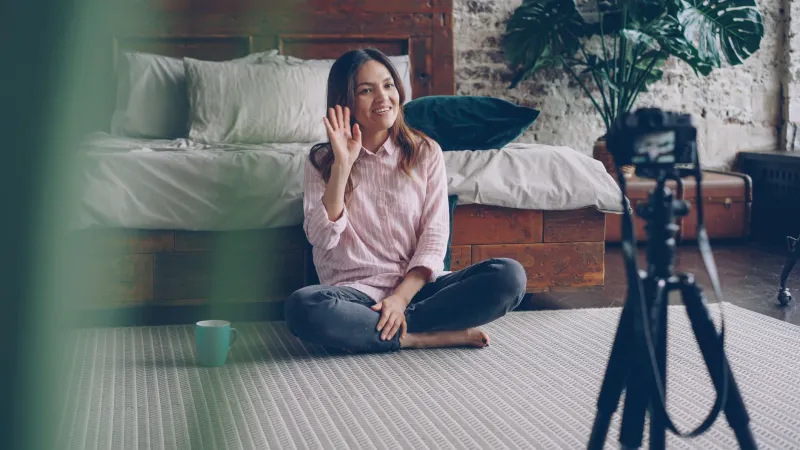
There's a moment — and if you've been building an audience for more than six months, you probably know exactly which moment I'm talking about — where sharing feels less like expression and more like bleeding. You've posted the breakup. You've filmed the crying-in-the-car video. You've done the "storytime: my worst year" thumbnail. And the numbers went up. So you did it again.
This is the loop nobody warns you about when they're selling you on "just be authentic."
The Authenticity Industrial Complex
Somewhere in the mid-2010s, "be real with your audience" became the dominant playbook for creator growth. And honestly? It wasn't bad advice at the time. Audiences were exhausted by polished, corporate-feeling content. They wanted to see the human behind the brand. A little behind-the-scenes, a little mess, a little honesty — that was the differentiator.
Fast forward to now, and that advice has been industrialized beyond recognition. Platforms actively reward emotional disclosure. The YouTube algorithm has a soft spot for confession-style thumbnails. TikTok's For You page surfaces vulnerability like a commodity. What started as a genuine antidote to inauthenticity has become its own performance — and a pretty exhausting one at that.
The result is a creator culture where the pressure to share more never actually stops. There's always another layer. Another secret. Another raw moment that could become content. And the audience — trained by the algorithm to expect access — starts to feel entitled to it.
When Connection Becomes Extraction
Here's where it gets uncomfortable: parasocial relationships aren't inherently bad. The feeling a listener gets when a podcast host seems to "get" them, or the sense that a YouTuber is a friend you just haven't met — that's actually the engine of the entire creator economy. It builds loyalty. It drives subscriptions, merch sales, Patreon tiers, all of it.
But there's a version of that dynamic that tips into something more extractive, and it usually starts with a creator who has been conditioned to believe their value is tied directly to how much of themselves they give away.
When you've shared your mental health struggles, your family drama, your financial stress, your relationship problems — you've essentially handed the audience a map of your vulnerabilities. Some of those people in your comments are genuinely rooting for you. But a meaningful chunk of them are there for the spectacle. And the algorithm doesn't distinguish between the two. It just counts the engagement.
The trap closes when you internalize that engagement as proof that you're doing the right thing. You're not building connection. You're building dependency — theirs on your pain, and yours on their reaction to it.
The Relatability Ceiling
There's also a practical creative problem with the oversharing model that doesn't get talked about enough: it has a ceiling.
Relatability is a finite resource. Once you've shared the hard stuff, you either have to keep escalating — going deeper, going darker, finding the next crisis to document — or you stagnate. Audiences who signed up for raw emotional content don't tend to stick around for the "actually, I'm doing great now" era. Stability is boring. Growth is hard to film. And healing, real healing, is usually quiet.
Some of the most talented creators I've watched over the past few years have hit this wall and had no idea what to do with it. They built audiences on struggle, and when the struggle resolved (or when they simply got tired of broadcasting it), the numbers dropped. The lesson they took from that wasn't "I shared too much." It was "I need to find something new to share." That's the trap doing its job.
What the Line Actually Looks Like
I'm not arguing for a return to perfectly curated, highlight-reel content. That ship has sailed and the audience has gotten too smart for it anyway. But there's a lot of real estate between "totally guarded" and "emotionally unfiltered at all times."
The creators who seem to navigate this best have a few things in common.
First, they share processed vulnerability rather than live vulnerability. There's a difference between telling your audience about a hard season you went through — with some perspective, some distance, some narrative arc — and documenting your breakdown in real time because the camera is already rolling. One builds trust. The other builds an audience that's addicted to your worst moments.
Second, they maintain a private life that's genuinely private. Not performatively private — not the "I don't share everything" disclaimer that's immediately followed by sharing everything — but actually, structurally off-limits. A relationship that never appears on screen. A friendship that doesn't become content. A creative process that stays internal. These aren't just healthy boundaries; they're the source material for the work itself. You can't create from an empty well.
Third, they've made peace with the fact that not every audience member is a fan. Some people are rubbernecking. Some are looking for someone to project onto. Some are genuinely malicious. A sustainable creator career requires you to build for the fans and stop optimizing for the rubberneckers — even when the rubberneckers generate more clicks in the short term.
The Longer Play
If you're building something that's supposed to last — a brand, a body of work, a creative career with actual longevity — the oversharing model is a liability, not an asset. It burns through your most personal material. It conditions your audience to expect access that isn't sustainable. And it tends to attract a segment of followers who aren't actually interested in your work — just your wounds.
The creators and artists who have real staying power aren't the ones who gave the most away. They're the ones who figured out what they were actually offering — a perspective, a skill, a worldview, a taste — and built around that instead of around their biography.
You don't owe your audience your interior life. You owe them your best work. Those are not the same thing, and conflating them is exactly what the platforms want you to do.
Keep something for yourself. Not because it's a strategy — though honestly, it is — but because that's the only way you stay a full person and not just a content machine running on fumes.
And a full person, it turns out, makes much better work.