When Anyone Can Fake It, What Does 'Real' Even Mean Anymore?
Let me be direct about something the industry is dancing around: the influencer economy as we currently know it is sitting on a foundation that's about to crack. Not because audiences are getting smarter, not because brands are getting savvier, but because the tools to manufacture credibility at scale are now available to essentially anyone with a credit card and a laptop.
This is not a drill. And the people at the top of the creator pyramid would be wise to stop treating it like one.
The Production Barrier Is Gone
For years, the influencer hierarchy was partly sustained by a production quality gap. The creators who broke through had better cameras, better editing, better lighting, better everything — and that polish signaled legitimacy. Audiences, consciously or not, used production value as a proxy for trustworthiness. If someone looked professional, they probably were.
Generative AI has demolished that logic entirely.
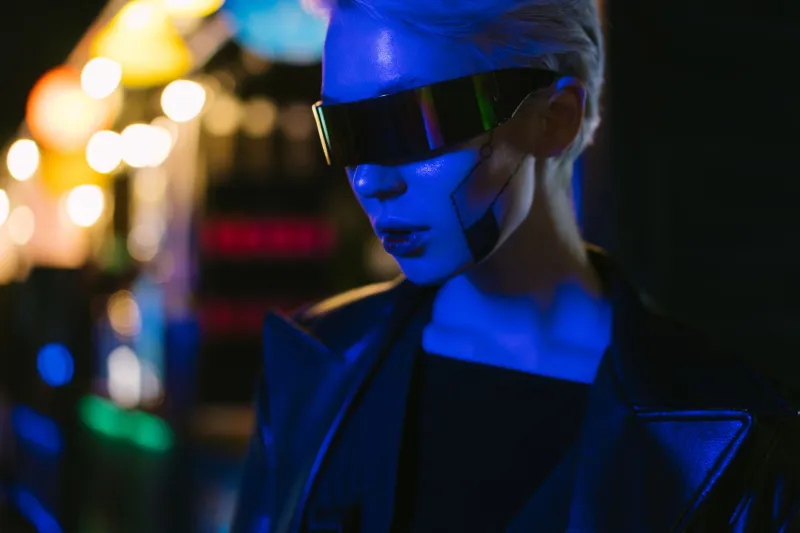
We are already in a moment where a synthetic persona — a face that doesn't exist, a voice that was never recorded, a backstory that was never lived — can produce content that is visually and audibly indistinguishable from the real thing. The deepfake discourse has mostly been framed around political disinformation, but the commercial implications for the creator economy are just as significant and considerably less discussed.
Imagine a brand-sponsored "creator" who never ages, never has a bad day, never posts something off-message, never demands a higher rate, and can be deployed across twenty languages simultaneously. That's not a hypothetical. The technology to build that exists right now. Some brands are already experimenting with it.
The Trust Architecture Is Breaking
The entire value proposition of influencer marketing — the reason brands pay real money for it — is the assumption that audiences trust the person delivering the message. Influencers aren't just ad space. They're supposed to be credible humans with real opinions who happen to have audiences. That trust transfers to whatever they're endorsing.
But trust is a fragile thing. And it's built on the assumption of authenticity.
When audiences start to genuinely question whether the person they're watching is real — whether the testimonial was lived, whether the recommendation was genuine, whether any of it happened — the trust transfer stops working. And we are moving, faster than the industry is comfortable admitting, toward a moment when that skepticism becomes the default rather than the exception.
The FTC has struggled to keep up with basic disclosure requirements for human influencers. The regulatory framework for AI-generated personas is essentially nonexistent. That vacuum is going to get filled by some combination of bad actors, confused consumers, and eventually a scandal large enough to force the conversation.
What Happens to the Pyramid
The influencer economy has always been shaped like a pyramid. At the top, a small number of mega-creators with massive audiences and significant cultural pull. In the middle, a larger tier of mid-size creators who've built genuine communities around specific niches. At the bottom, a sprawling base of micro-influencers with smaller but often highly engaged followings.
AI disrupts each level differently.
At the top, the threat is reputational. Deepfakes of established creators already exist. Misinformation campaigns using synthetic versions of real people's faces and voices are a documented problem. The bigger you are, the bigger the target on your back — and the more damage a convincing fake can do to the trust you've spent years building.
In the middle, the threat is displacement. If AI can produce niche content at scale — personalized fitness advice, cooking tutorials, financial explainers — the production advantage that mid-tier creators relied on evaporates. The question becomes what they offer that an algorithm-optimized synthetic persona cannot.
At the base, the threat is saturation. The barrier to entry for creating content is already nearly zero. AI makes it lower still. When anyone can generate a week's worth of polished content in an afternoon, the volume of noise in any given niche becomes overwhelming, and discoverability for authentic human creators gets harder.
So What Actually Differentiates You Now?
Here's where I'll give you my honest read, for whatever it's worth.
The creators who are going to matter on the other side of this disruption are the ones who are genuinely, provably, irreducibly human in ways that matter to their audience. That sounds abstract, so let me be specific.
Lived experience that can be interrogated. An AI persona can claim to have run a marathon. It cannot answer a real-time question from a fan about what mile twelve actually felt like, in a way that resonates as true. Real human experience — messy, specific, verifiable — is something synthetic content cannot replicate at depth.
Real-time presence. Live content, direct interaction, community engagement that happens in the moment — these are the formats that create the most friction for fabricated personas. The more a creator's value is embedded in genuine, unscripted human connection, the harder they are to replace.
Accountability and track record. Over time, the creators who've built a documented history of honesty — who've been wrong in public and admitted it, who've evolved their views transparently, who've maintained consistency between their online persona and their offline reality — will carry a credibility premium that no synthetic creation can manufacture.
The irony of the AI moment in creator culture is this: the technology that threatens to make authenticity irrelevant is simultaneously making it more valuable than it's ever been. When production quality is democratized, character becomes the last real differentiator.
The question is whether you've actually got some.