Authenticity Won't Pay Your Rent — But Strategy Might
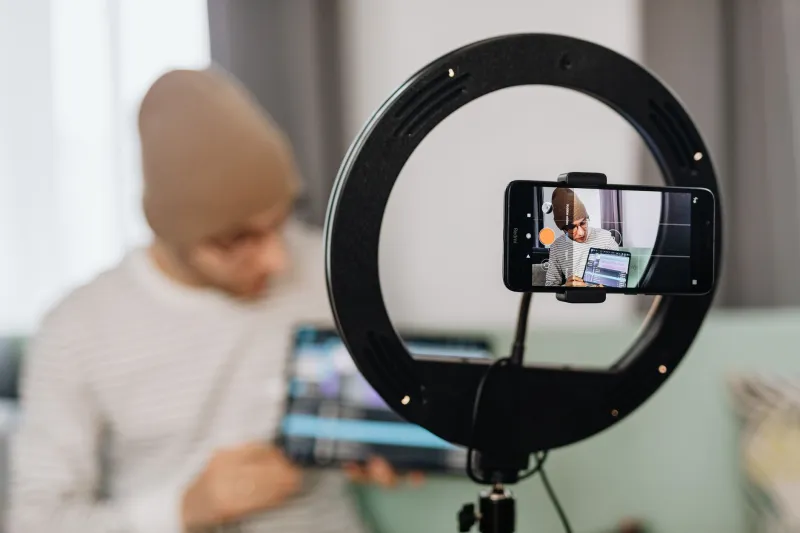
Somewhere along the way, 'just be yourself' became the most repeated — and least examined — piece of advice in the creator economy. It sounds liberating. It feels emotionally safe. And it has almost nothing to do with why the creators you're watching are actually growing.
Let's be honest about what's happening out there.
The Authenticity Gospel Got Commercialized
The idea that audiences reward raw, unfiltered honesty isn't wrong exactly — it's just incomplete. What platforms actually reward is engagement, and engagement is a behavioral metric, not an emotional one. The algorithm at TikTok, Instagram, or YouTube doesn't have feelings. It's not rooting for you because you shared something vulnerable on a Tuesday afternoon. It's measuring watch time, saves, shares, and return visits.
The creators who figured this out early stopped asking 'Am I being real?' and started asking 'What does this person need to feel in the next three seconds?'
That's a fundamentally different question.
MrBeast doesn't win because he's authentic. He wins because every single production decision is engineered to keep you watching. Emma Chamberlain didn't blow up because she was unpolished — she blew up because her particular flavor of unpolished felt new at a specific cultural moment, and she was sharp enough to lean into it with precision. The messiness was a choice. That's not the same thing as just showing up.
Performance and Honesty Aren't Mutually Exclusive
Here's where the conversation usually goes sideways. People hear 'strategy' and assume it means being fake. That's a false binary.
You can be genuinely passionate about something and still think carefully about how you frame it, when you post it, and what emotional hook you're leading with. A musician who loves jazz isn't being inauthentic when they write a hook that draws listeners in before the complex chord progressions kick in. They're being smart about access.
The problem isn't authenticity as a value. The problem is when creators treat it as a substitute for craft.
Posting a rambling 12-minute video about your feelings isn't brave — it's just unedited. There's a difference. Audiences can feel the difference, too, even if they can't articulate it. What reads as 'real' on screen is almost always the result of someone understanding the performance well enough to make it feel effortless.
What Actually Moves the Needle
Look at the creators who've built durable audiences in the last three years and you'll notice some patterns that have nothing to do with oversharing.
Specificity beats vulnerability. Accounts that go deep on a narrow topic — obscure film scores, competitive BBQ circuits, the economics of sneaker resale — consistently outperform vague lifestyle content from people trying to be relatable to everyone. Specificity signals authority, and authority builds trust faster than a tearful story ever will.
Tension drives watch time. Whether it's a debate, a transformation, a countdown, or a mystery, content with a built-in question that needs answering keeps people around. That's not manipulation — it's storytelling. And storytelling is a craft you can learn.
Consistency of voice, not consistency of mood. The creators who last aren't the ones who show up the same way every day emotionally. They're the ones whose perspective is recognizable. You know how they see the world. That's a brand. That's built, not born.
So Why Does Authenticity Still Get Preached?
Because it sells courses. Because it's comforting. Because telling someone 'just be strategic and study the platform' is harder to package than 'just be you.'
There's also a real backlash happening against overly polished content — and that's legitimate. Audiences are exhausted by perfection. But the response to that exhaustion isn't to abandon craft. It's to recalibrate what 'good' looks like. Right now, 'good' often means feeling human, unscripted, a little rough around the edges. But creators who are winning at that aesthetic are still choosing it. Still thinking about it. Still performing it.
The algorithm doesn't care whether you cried before you hit record. It cares whether someone watched until the end and then came back tomorrow.
The Takeaway Nobody Wants to Hear
You can absolutely build something meaningful while being genuinely yourself. But 'yourself' needs to be interesting, specific, and delivered with some awareness of how attention works in 2024. That's not selling out. That's professionalism.
The creators who are going to last aren't the most authentic ones. They're the ones who figured out that authenticity is an ingredient — not the whole recipe.
Stop waiting for the platform to reward your honesty. Start giving it a reason to show your work to someone new.
That's the unfiltered version.